
Selling Your Business? What Happens to Your Website, Domain Name and Email Accounts?
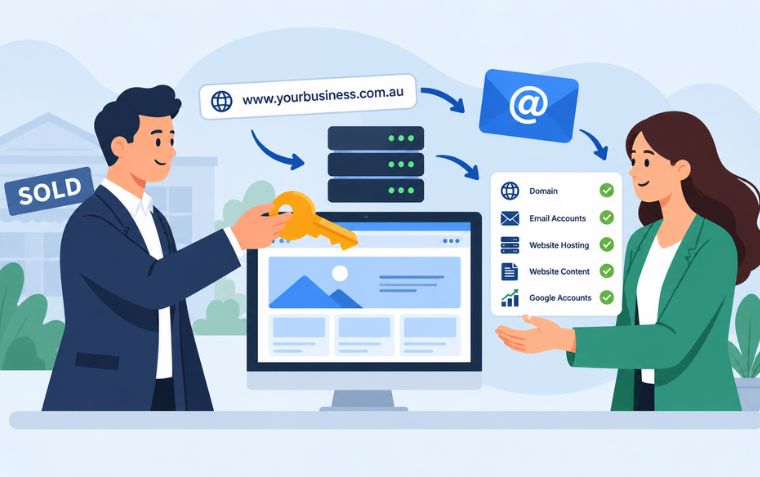
When selling a business, your website, domain name, email accounts and hosting services are valuable business assets that need to be transferred correctly to the new owner. Overlooking these digital assets during the sale process can lead to website downtime, lost emails, interrupted customer enquiries and unnecessary complications for both the buyer and seller.
While business owners often focus on financial records, equipment, stock and customer databases, the transfer of digital assets is just as important for ensuring a smooth transition.
Your website may be responsible for generating enquiries, online sales and customer trust, while your domain name and business email addresses are essential to maintaining your business identity.
Planning the transfer of these assets early can help protect business continuity and ensure the new owner has the access and support they need from day one.
Why Digital Assets Matter When Selling a Business
A business website is more than an online brochure. It may have years of established Google rankings, valuable content, customer enquiries, online transactions and brand recognition.
Similarly, your domain name is closely connected to your business identity, while your email accounts often contain important communications with customers, suppliers and service providers.
Important digital assets to consider include:
-
Website: The existing website, content, images and functionality.
-
Domain Name: The registered web address associated with the business.
-
Domain Registration and Management: Registrant details, renewals and DNS settings.
-
Website Hosting: The service that keeps the website accessible online.
-
Business Email Accounts: Existing email addresses, mailboxes and historical email data.
-
Email Hosting: The service responsible for sending, receiving and storing business emails.
-
Google Accounts: Google Analytics, Google Search Console, Google Business Profile and other relevant services.
-
Third-Party Integrations: Payment gateways, online booking systems and other connected services.
Failing to identify and correctly transfer these assets can create problems long after the business sale has been completed.
1. Transferring Ownership of Your Domain Name
Your domain name is one of the most important digital assets associated with your business. It's the address customers use to find your website and is often connected to your business email accounts.
When a business changes ownership, the domain registration details need to be reviewed and updated where required.
Updating the Domain Registrant
The domain registrant is the person or organisation recorded as holding the right to use the domain name.
For Australian .com.au and .net.au domains, changes in ownership must comply with the eligibility and transfer requirements established by auDA, Australia's domain name administrator.
Depending on the structure of the business sale, a formal change of registrant may be required rather than simply updating the contact details.
Web Ideas manages and maintains domain name registrations for our clients, including renewals and domain management services.
When a business is sold, we can assist with reviewing the existing registration details, coordinating the required registrant updates and ensuring the domain continues to operate correctly.
This helps the new owner maintain the business's established online identity without unnecessary disruption.
2. Continuing Your Website Hosting With Web Ideas
Website hosting is the service that makes your website available to visitors online.
At Web Ideas, our websites are developed using our own content management system (CMS) and provided as a hosted website solution.
This means that when a business with a Web Ideas website is sold, the website hosting needs to remain with Web Ideas for the existing website to continue operating.
Rather than migrating the website to a different hosting provider, the focus is on transferring the relevant account and billing arrangements to the new business owner.
Our team can assist with:
-
Updating website account and billing details
-
Establishing the new owner as the authorised contact
-
Maintaining the existing website hosting
-
Reviewing website access and administration permissions
-
Providing guidance on managing website content
-
Assisting with website updates or changes required by the new owner
Keeping the website hosted with Web Ideas helps maintain continuity, reducing the need for unnecessary technical changes during the business handover.
It also means the new owner has access to an experienced Australian-based support team who understands the website and can assist with ongoing maintenance and improvements.
3. Managing Business Email Accounts During the Transition
Business email is often one of the most overlooked aspects of a business sale.
Email accounts may contain years of customer correspondence, supplier information, order confirmations and other records essential to ongoing operations.
For example, the new owner may need continued access to addresses such as:
However, transferring email services requires more than simply providing the new owner with email passwords.
What Needs to Be Considered?
Email Hosting: Identify where the business email accounts are hosted and whether the existing service will continue.
Existing Mailboxes: Determine which email addresses need to remain active.
Historical Emails: Establish whether previous emails, folders and contacts need to be retained or migrated, subject to privacy requirements and the terms of the sale.
Email Configuration: Ensure the domain's email records are correctly configured to maintain reliable email delivery.
Account Security: Update passwords, recovery information and authorised access for the new owner.
Web Ideas can assist with email hosting questions, account configuration and coordinating email changes as part of the business transition.
Our aim is to help minimise disruption so customers and suppliers can continue communicating with the business.
4. Protecting Your Google Rankings and Website Traffic
If your business website has established Google rankings, organic traffic and online enquiries, these represent significant value to the new owner.
A poorly managed website migration can put that value at risk.
Fortunately, transferring business ownership doesn't automatically mean losing existing search engine rankings.
If the domain name, website content, URL structure and hosting environment remain consistent, the transition can often be completed with minimal disruption.
Important SEO considerations include:
-
Maintaining the existing domain name
-
Preserving important website pages and URLs
-
Retaining optimised page titles, headings and content
-
Keeping internal links and navigation working correctly
-
Ensuring the website remains accessible to search engines
-
Monitoring Google Search Console following the transition
A business sale is not necessarily the best time to make major website changes. Maintaining a stable website during the ownership transition can help protect existing search visibility and customer enquiries.
Once the handover is complete, the new owner can review opportunities to update or improve the website to suit their future business plans.
5. Transferring Google Business Profile, Analytics and Other Accounts
Your website is often connected to external platforms that support marketing, reporting and customer enquiries.
These should also be considered during the business sale.
Google Business Profile
Your Google Business Profile may contain valuable customer reviews, business information, photographs and local search visibility.
The new owner should be granted appropriate ownership permissions through Google's business profile management process.
Google Analytics and Search Console
Google Analytics 4 and Google Search Console provide useful historical information about website traffic and search performance.
Maintaining continuity of these services can help the new owner understand how the website performs before and after the sale.
Other accounts to review may include Google Ads, social media profiles, email marketing systems, e-commerce services and payment gateways.
6. Updating Account Ownership, Billing and Contact Details
Many website and domain services operate on recurring subscriptions.
When a business changes ownership, it's important to ensure the relevant account information is updated so that renewal notices, invoices and technical communications reach the correct person.
As part of the handover, review:
-
Account ownership and authorised contacts
-
Billing details and payment methods
-
Domain registration and renewal information
-
Website and email hosting arrangements
-
Website administrator permissions
-
Third-party subscriptions and integrations
-
Account recovery email addresses and phone numbers
For Web Ideas clients, we can assist with updating the relevant website hosting and domain management records to reflect the new business arrangements.
This helps ensure the new owner receives important notifications and has a clear point of contact for future assistance.
7. Plan the Digital Handover Before Settlement
One of the best ways to avoid complications is to contact your website provider before the business sale is finalised.
This allows time to identify the digital assets involved, confirm the required ownership changes and coordinate the transition.
A structured handover should include:
-
Identify Digital Assets: Review the website, domain, email accounts and connected services.
-
Confirm Ownership: Establish who currently owns or controls each asset.
-
Agree on Transfer Requirements: Determine which accounts and data are included in the sale.
-
Coordinate Account Changes: Update domain registrant details, hosting arrangements and authorised contacts.
-
Review Email Services: Ensure important email addresses and communications remain accessible.
-
Test Website Functionality: Confirm the website, forms and other essential features continue working.
-
Complete the Handover: Finalise billing details, access permissions and ongoing support arrangements.
Where possible, these changes should be coordinated with the settlement date to ensure a smooth transition.
8. Ongoing Website Support for the New Business Owner
Purchasing an established business often means taking responsibility for a website and online services that the new owner may not be familiar with.
At Web Ideas, our support doesn't end when the business changes hands.
We understand that new owners may have questions about how their website works, where their domain is registered, how their email accounts are configured or how to make changes to their website content.
Our team is available to assist with:
-
Explaining how the existing website operates
-
Providing guidance on updating website content
-
Making website changes and improvements
-
Answering domain registration and management questions
-
Assisting with email account and hosting enquiries
-
Reviewing website functionality and future requirements
-
Providing ongoing website maintenance and technical support
Whether the new owner wants to continue operating the website as it is or make updates to reflect their business plans, we're happy to help wherever we can.
Having an experienced team already familiar with the website can make the transition considerably easier.
Your Website and Domain Are Valuable Business Assets
Selling a business involves transferring more than physical assets and customer relationships.
Your website, domain name, email accounts and online services are important components of the business's identity, reputation and day-to-day operations.
A poorly planned transfer can result in lost emails, website downtime, disrupted enquiries and complications with account ownership.
By identifying these assets early and working with your existing website provider, both buyers and sellers can enjoy a smoother transition.
Selling Your Business? Web Ideas Can Help With the Digital Handover
At Web Ideas, we understand the importance of maintaining website, domain and email continuity when a business changes ownership.
We manage and maintain domain name registrations for our clients, provide ongoing hosting for websites built on our CMS, and assist with the technical and administrative changes required during a business handover.
Our Australian-based team is also available to support new business owners with website updates, email questions, domain management and ongoing technical assistance.
Whether you're selling your business or taking over an existing one, we're here to help make the transition as straightforward as possible.
Planning to sell or purchase a business? Contact Web Ideas to discuss the handover of your website, domain and email services.
Related Frequently Asked Questions
How Can You Protect Your Business Against Fake Invoice Scams?
The most effective defence against invoice fraud is to pause before making any payment. Don't let the urgency of an invoice pressure you into acting immediately.

How Important Is Domain Name Registration?
Your domain name is one of the most important assets in your online presence, and it's essential to maintain control of it.